
What happens when people who carry a heavy load of stress breathe in bergamot every day for two weeks? That question sat at the heart of my doctoral research, and the answers still move me.
Twelve people completed the study: firefighters, service members and a medical first responder, all carrying a lot of stress after hard experiences. For two weeks, they used one oil, bergamot, and wrote down how they felt every day (Daniel & Zolnikov, 2023).
Why bergamot
I chose a single oil on purpose. With one oil, we could see what one plant can do on its own, without a blend.
I chose bergamot for three reasons. Its scent is pleasant and light, which mattered because people would be using it at work and at home, around others. It's gentle when used the way we used it. And in all the research I reviewed, bergamot reached the widest range of what people wanted help with: feeling calm, sleeping well and lifting their mood.
Bergamot is a citrus, and you know what citrus does in my Plant Personalities. It uplifts. 🍊
What participants did
The routine was simple on purpose, so it could fit into a busy day:
- 🌅 Morning (6–8 a.m.): two drops of bergamot in the palm, then five deep breaths.
- ☀️ Midday (11 a.m.–1 p.m.): the same two drops and five breaths.
- 🌇 Late afternoon (4–6 p.m.): once more.
- 🌙 Night: five drops of bergamot in a diffuser beside the bed, running while they slept.
Every day for two weeks, they answered three questions in a notebook. How did you feel today? What was different, if anything? What did you notice after using the oil?
Those three times fit the natural pauses in a day: first thing in the morning, a lunch break, an evening break. The diffuser carried the scent through the night.
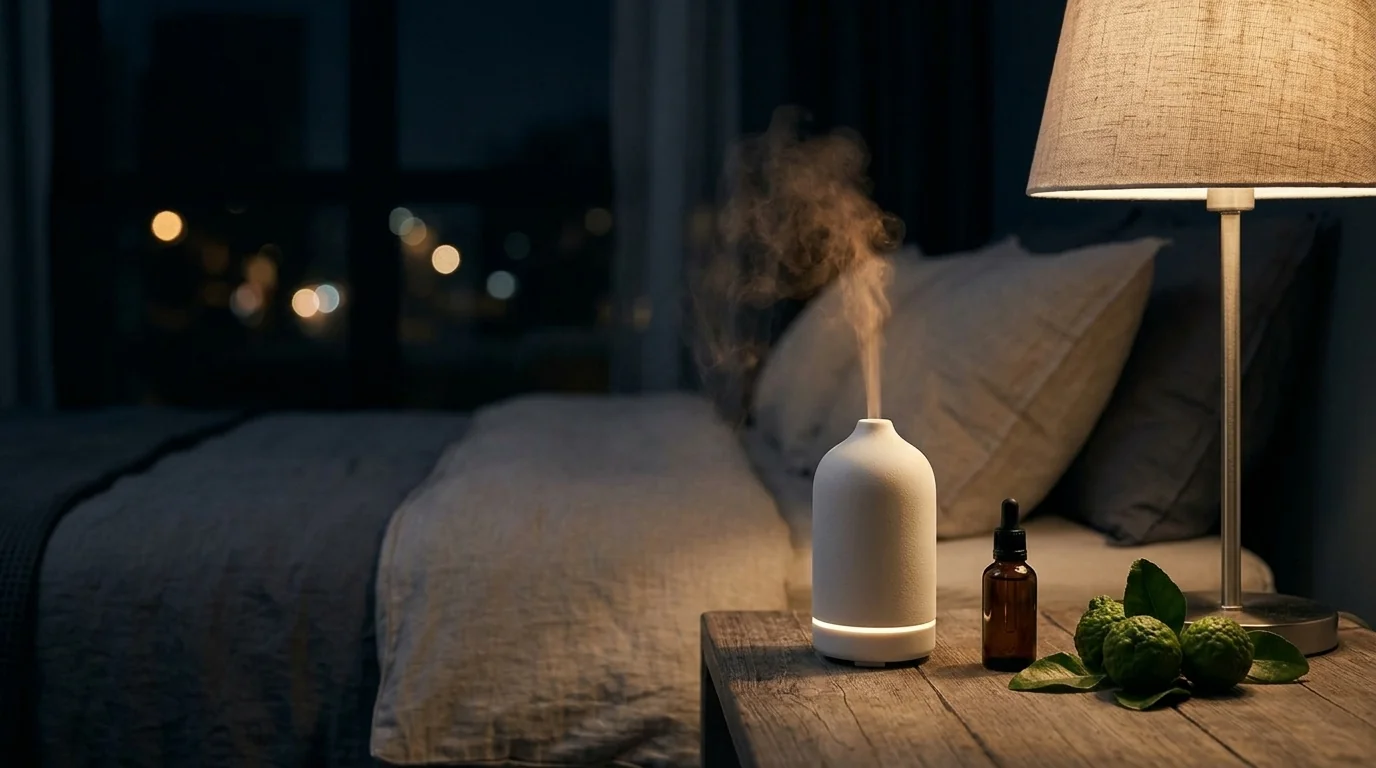
Try it: Pick the same three pauses in your own day for two weeks, and let bergamot keep you company at night.
In their words
The notebooks are my favorite part of this research. Here are a few entries, word for word.
On sleep, one participant wrote: "The sleep was a shock. I have tossed and turned for as long as I can remember, and I didn't do that with the bergamot." After years of restless nights, they slept soundly from the very first night with the diffuser.
On calm in the moment: "I felt a grounding sensation, it was almost like it was resetting me every time I would breathe it in." Each breath of bergamot worked like a reset button.
On how they handled hard moments: "I found that this helped me from instantly reacting like I normally would do; I was able to slow down a little bit and respond better." The scent gave them a pause between the feeling and the reaction.
And on day 14: "Overall today I noticed that the longer you do this process, the longer it helps." The calm grew with steady use.
That matched what the whole group showed. Sleep improved within the first day or two. The biggest shifts came around day 7 or 8, when people felt calmer and the calm lasted longer (Daniel, 2020).
What it means
What I take from these notebooks is hopeful and practical. One oil, a few breaths at the natural pauses of the day and a diffuser at night became a rhythm people looked forward to. As one participant put it, they found themselves "looking forward to the aromatherapy."
Rhythm matters. Calm built day by day, and the people who kept going felt it last longer. So if you try bergamot, give it two weeks before you decide what it does for you.
I teach how to use research like this with clients, from the science to real routines, in my Certification. The first lessons are free to start.
In my next post, I'll share how our gut and our mood talk to each other, and how breath and scent can calm both. Until then, what natural pause in your day could become your bergamot moment? 🌿